Canaan in the Time of Israel's Entry into the Land

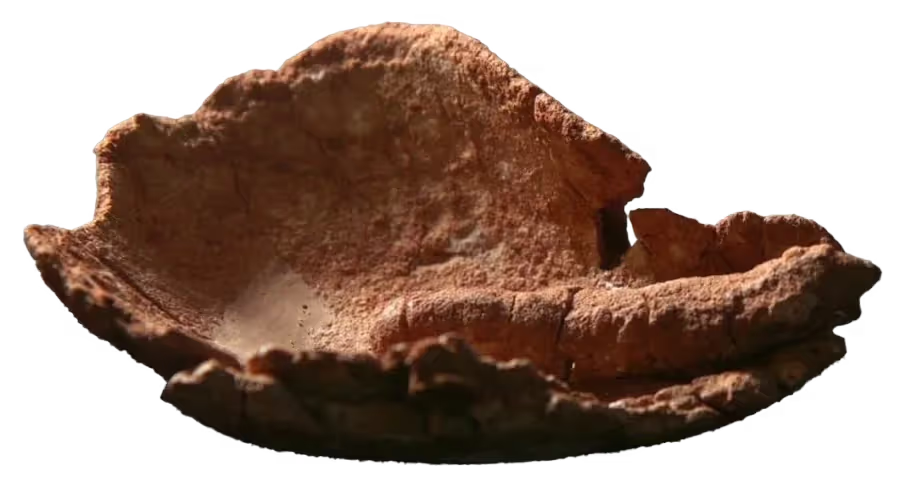
The set of utensils probably used for ceremonial pouring. Photo: Katerina Katzan, Israel Antiquities Authority
An Israel Antiquities Authority excavation, conducted prior to road construction undertaken by the Netivei Israel – National Transport Infrastructure Company, discovered a wine press – one of the oldest ever uncovered in the country, and perhaps the world, along with other unique finds that instruct us about everyday domestic Canaanite worship taking place outside Tel Megiddo.
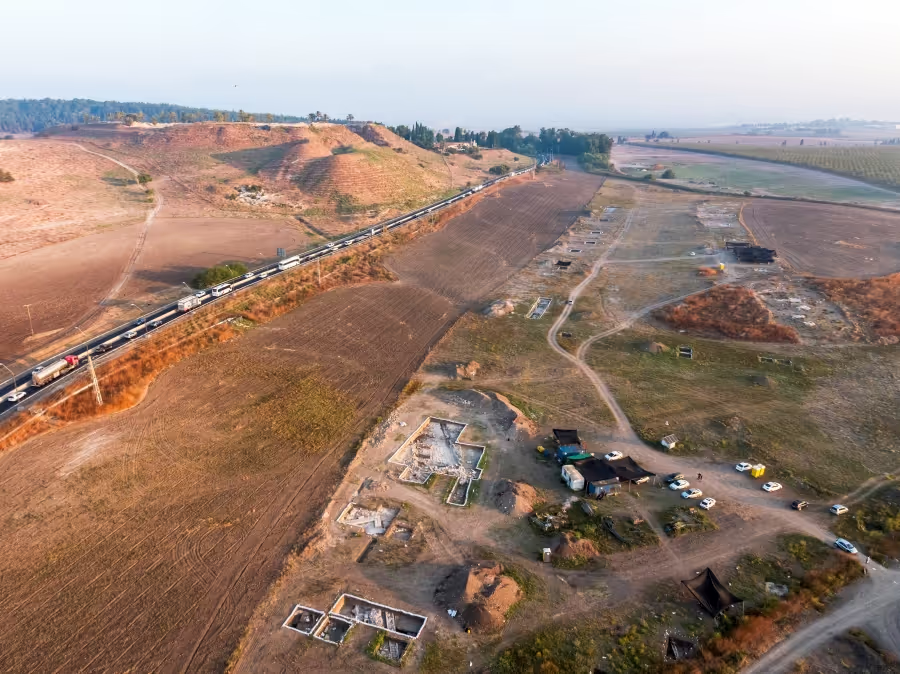
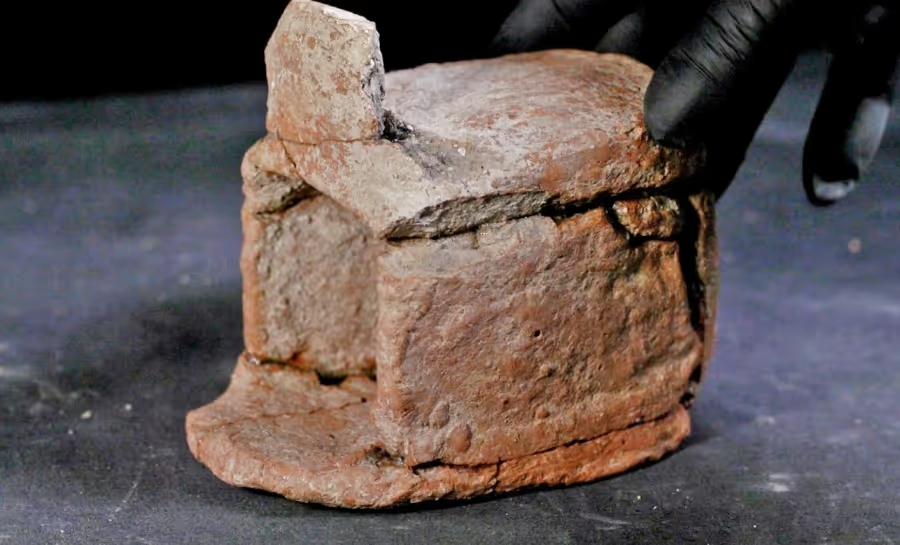
Impressive evidence of Jezreel Valley settlement expansion at the onset of urbanization, and of the Canaanite cult that existed in the land before the Israelites entered the region, was recently uncovered east of Tel Megiddo. Archaeological excavations conducted by the Israel Antiquities Authority in conjunction with Highway 66 development, initiated and financed by the Netivei Israel – National Transport Infrastructure Company, uncovered an approximately 5,000-year-old hewn winepress – one of the oldest ever discovered in the country, as well as later 3,300-year-old evidence of Canaanite folk cult – a ceramic shrine model and an intact ceremonial zoomorphic utensil kit.
The archaeological excavations were conducted within the large-scale transportation project promoted by the Ministry of Transport through the Netivei Yisrael (National Transport Infrastructure Company) along Highway 66. As part of the project, the existing road, serving as a vital transportation artery connecting Yokneam, the Jezreel Valley, and the Gilboa region, will be upgraded to a dual-carriageway with two lanes in each direction. The extensive archaeological excavations spanning 1.2 km along the Highway 66 Section 2 route have uncovered numerous finds from various periods. Israel Antiquities Authority archaeologists discovered exceptional finds from the Early Bronze Age IB/Early Canaanite period, 5,000 years ago, and the Late Bronze Age II/Late Canaanite period, 3,300 years ago.

From the Early Bronze Age period, a small wine production press was exposed, carved into the rock, featuring a sloping treading surface and a collection vat. According to Dr. Amir Golani and Barak Tzin, Excavation Directors on behalf of the Israel Antiquities Authority, "This winepress is unique, one of very few known from such an ancient period when urbanization first took place in our region. Winepresses are indeed very common throughout the country, but it is very difficult to date them. Until now, indirect evidence indicated that wine could have been produced 5,000 years ago, but we did not have conclusive proof of this – a ‘smoking gun’ that would clearly show when this happened in our area. This winepress finally provides new and clear evidence that early wine production actually took place here.” Many residential buildings were also uncovered around the winepress – evidence of its importance within the community at that time and of Megiddo's expansion far beyond the well-known boundaries of the tell.
The excavation uncovered additional surprises that shed light on the ancient Canaanite cult at Megiddo. Ritual vessels were uncovered from the Late Bronze Age II, about 3,300 years ago, and were carefully placed in the ground in an orderly burial as ritual offerings. These included a miniature ceramic model of a shrine, storage jars, imported jugs and juglets from Cyprus, and a unique and impressive set of vessels, which was probably used for libations, or the ceremonial pouring of liquids. This set comprises a zoomorphic vessel in the shape of a ram and a few small bowls nearby. Vessels like this are usually discovered only as isolated, occasional fragments, making it difficult for researchers to understand their complete form and how they functioned together. Since this set was buried intact and in a manner hinting at its function, it allows, for the first time in the entire region, a glimpse into the way Canaanites used these vessels in their ritual ceremonies thousands of years ago:
“A small bowl, which was attached to the ram's body, was designed to function as a funnel; and a similar bowl – with a handle – was probably held to pour the liquid into the funnel during a ceremony”, the researchers explain. “The ram's head was shaped like a spout. Once the vessel was filled, tilting the ram forward spilled the liquid from its mouth into a small bowl placed before it. The vessel seems intended for pouring a valuable liquid such as milk, oil, wine, or another beverage, which could either be drunk directly from the spout, or poured into a smaller vessel for consumption, or as a votive gift.”
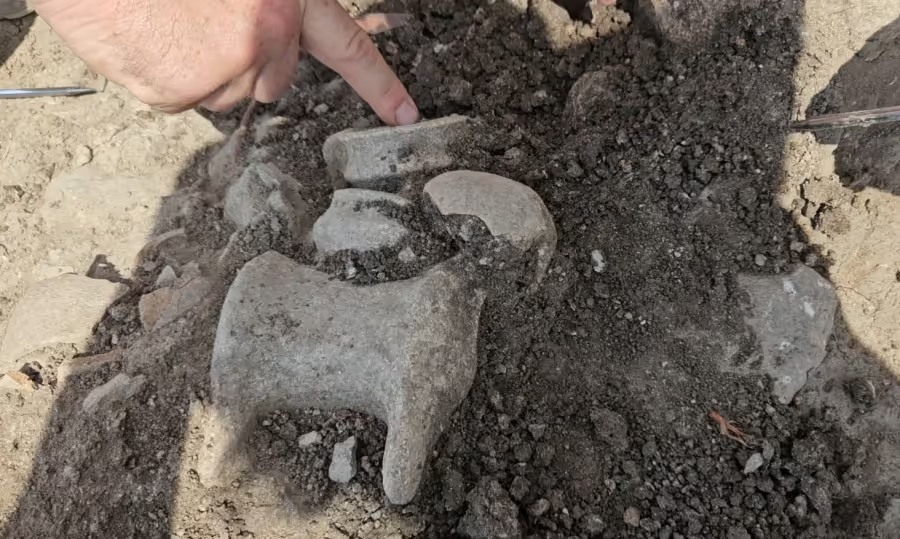
The researchers believe that the burial locations of these ritual vessels in the ground yet in the direct line of sight to the large temple area operating at Tel Megiddo in the Late Bronze Age II – may indicate a Canaanite folk cult that took place outside the city on the way to the main city gate – possibly by local farmers who could not enter the city and its temple, coning from their nearby fields to offer consecrations of liquids or valuable agricultural produce, such as wine or oil. Some of these offerings were discovered as intact pottery vessels buried next to a large rock outcrop, which may have served as an open-air altar outside the Canaanite city of Megiddo.

“Megiddo has been excavated for over a century,” the researchers summarize. “While it is long-recognized as a key site in the study of ancient urbanism and Canaanite worship, the excavations we conducted east of the tel have revealed a new part of the matrix between the known settlement in the city – evidence of which has been revealed upon the tel – and the activities taking place in the area around and outside the city. The 5,000-year-old hewn winepress places the beginnings of the local wine industry in a very early urban-settlement context, while the offerings from the period about 3,300 years ago indicate the continuity of ritual consecration and libations outside the sacred complex within the tell, possibly expressing aspects of the local Canaanite folk cult.”