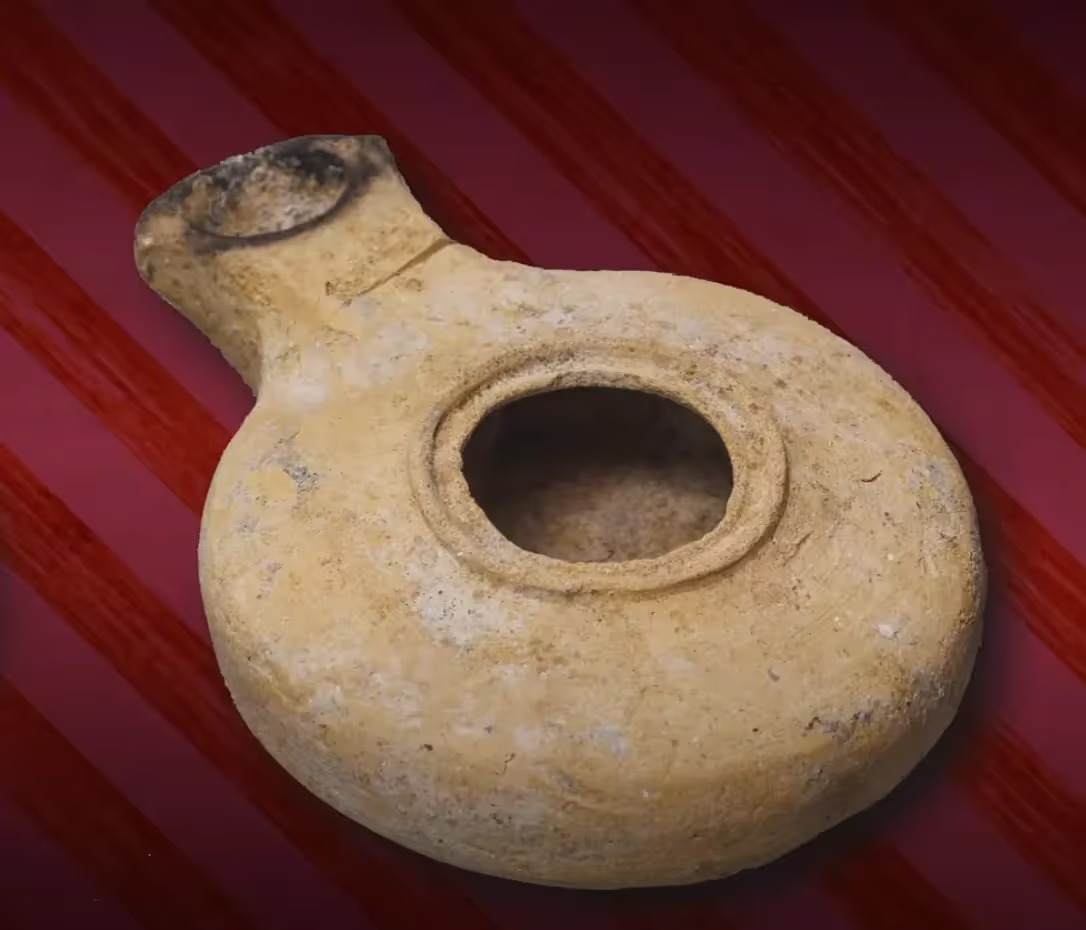
“For the Redemption of Zion” – A rare coin from Year Four of the Great Revolt discovered in Jerusalem

Photo: Emil Aladjem, Israel Antiquities Authority
A bronze coin minted by Jews in Jerusalem during the final year before the destruction of the Second Temple in 70 CE was discovered during excavations in the Jerusalem Archaeological Garden – Davidson Center conducted by the Israel Antiquities Authority, in collaboration with the City of David and the Jewish Quarter Reconstruction and Development Company.
A bronze coin minted by Jews in Jerusalem during the final year before the destruction of the Second Temple was discovered during archaeological excavations in the Jerusalem Archaeological Garden – Davidson Center conducted by the Israel Antiquities Authority in collaboration with the City of David and Jewish Quarter Reconstruction and Development Company. This rare coin, discovered near the southwest corner of the Temple Mount, was minted during the 4th year of the Great Revolt against the Romans. The obverse side of the coin carries the inscription in ancient Hebrew script: “For the Redemption of Zion”– expressing the heartfelt desire of Jerusalem‘s Jews, towards the end of the revolt.
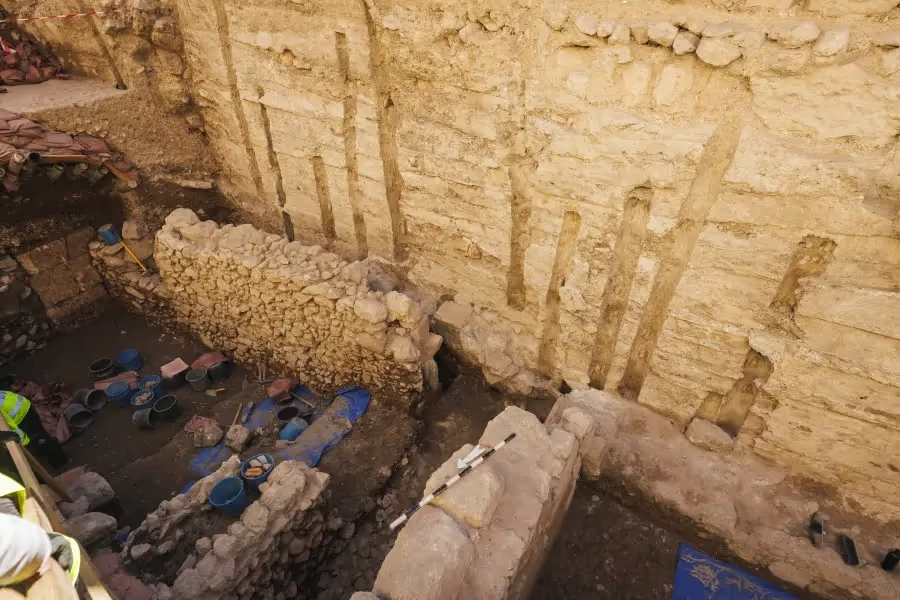
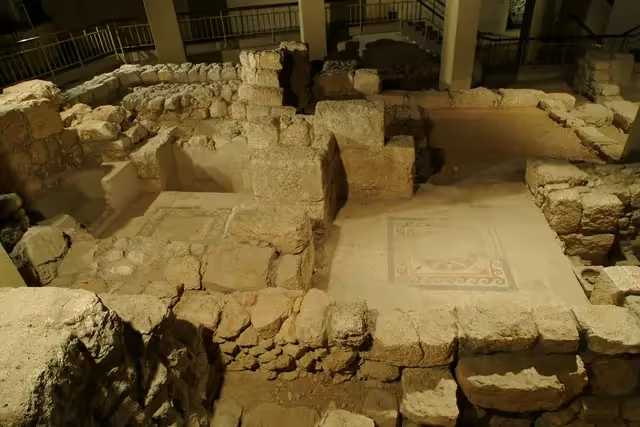
Excavations conducted by the Israel Antiquities Authority at this site, now in its sixth season, directed Dr. Yuval Baruch, Dr. Filip Vukosavović and Esther Rakow-Mellet, are revealing impressive, monumental remains ranging from the Second Temple period to the Umayyad period (2nd Century BCE—7th Century CE), and an abundance of finds – some unique. The Shalem Project and the City of David Foundation finance the excavations.
According to Esther Rakow-Mellet, archaeologist at the Israel Antiquities Authority, “In the last few days, an unexpected gift was discovered: Yaniv David Levy, our coin researcher, came here and to his great surprise found a coin, covered in dirt. Already then, we thought from the looks of it that it might be a rare coin. We waited anxiously for several days until it came back from cleaning, and it turned out that it was a greeting from the Jewish rebels in the Year Four of the Great Revolt.”
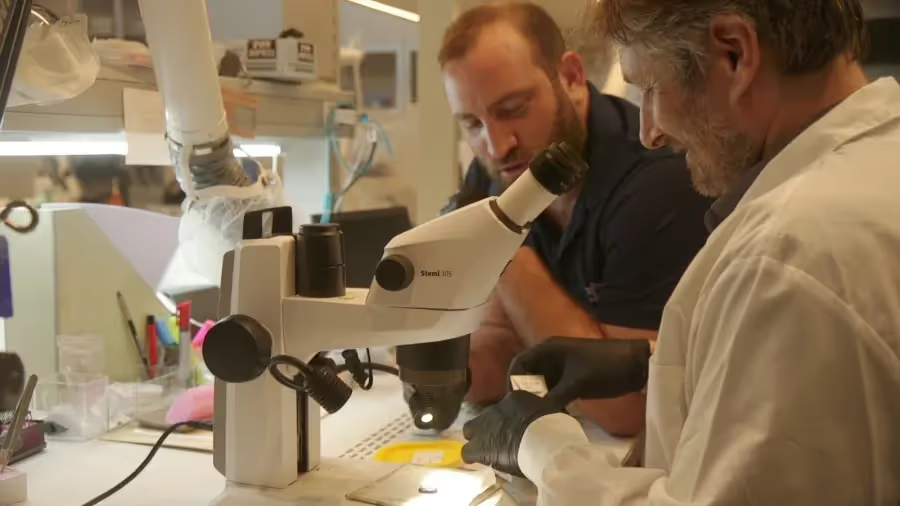
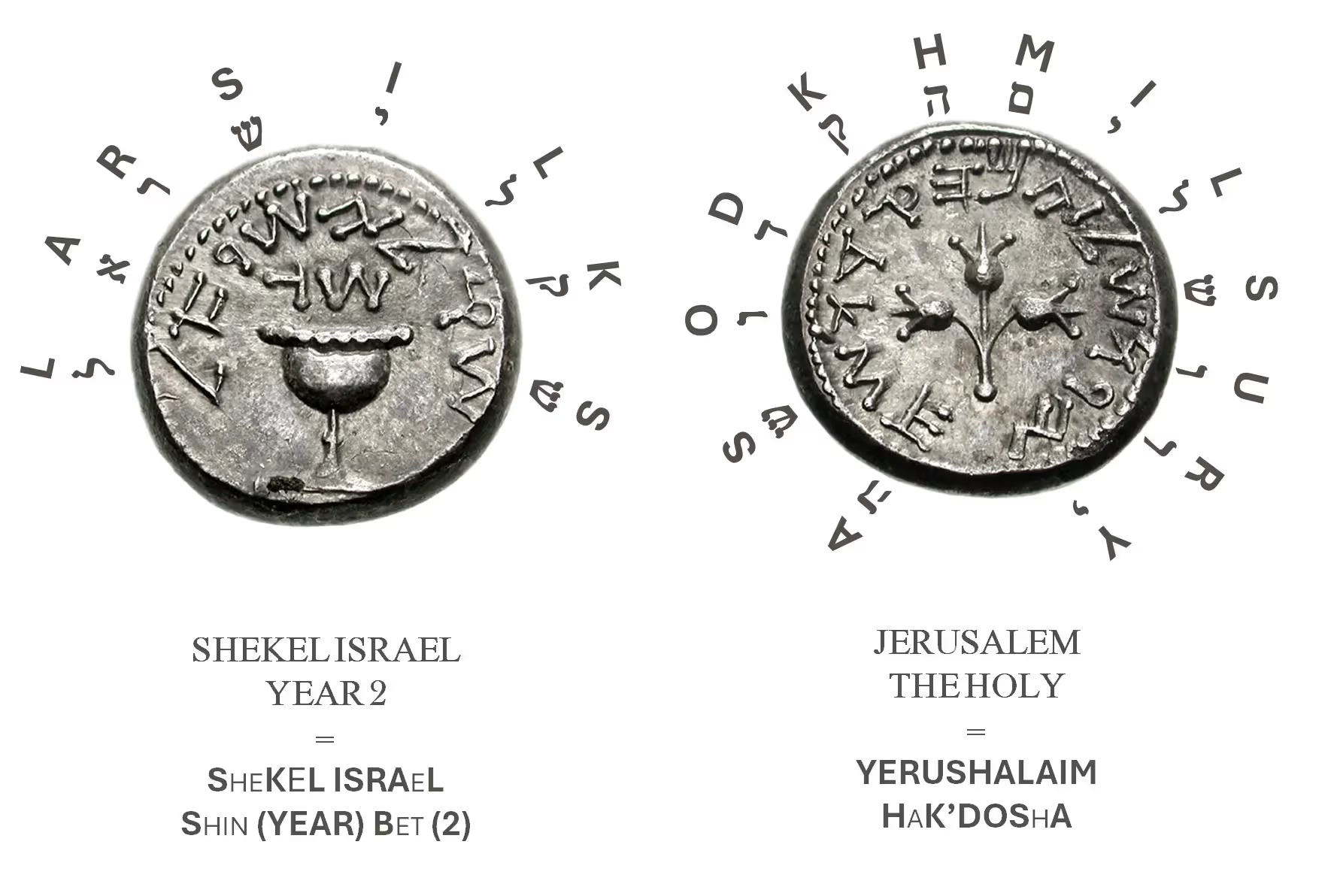
According to Yanniv David Levy, a researcher and curator in the coin department of the Israel Antiquities Authority, “The coin is made of bronze, and its state of preservation is quite good. On its obverse side you can see a model of a goblet, and around it is an inscription in ancient Hebrew script: ‘LeGe’ulat Zion’, ‘For the Redemption of Zion’. On its reverse is a lulav, a palm frond used in the Sukkot festival ritual. Next to it are two etrogs, the citron used in that same ritual. The reverse bears the inscription: ‘Year Four’.” This inscription denotes the number of years since the outbreak of the rebellion, allowing us to accurately date the coin to the period between the Hebrew month of Nissan (March-April) in the year 69 CE and the month of Adar (February-March) in the year 70 CE. According to Levy, “The ‘Year Four’ bronze coins differ from their predecessors. Their size and weight increased significantly, and the earlier rebel coin inscription, ‘For the Freedom (Herut) of Zion’, is replaced by a new inscription – ‘For the Redemption of Zion’.
In the research, it is accepted that Great Revolt Year Four coins were minted in Jerusalem under the leadership of Shimon Bar Giora, one of the prominent commanders in the revolt’s last year. Year Four coins are considered relatively rare, given the historical circumstances towards the end of the revolt and its impact on the much-reduced rebel production capabilities. Most of the Year Four coins were discovered in and around Jerusalem.

According to Dr. Yuval Baruch, Excavation Director on behalf of the Israel Antiquities Authority, who has researched this site for over 25 years, “The inscription on the coin – “For the Redemption of Zion”, replacing the earlier “For the Liberation of Zion” – indicates a profound change of identity and mindset, and perhaps also reflects the desperate situation of the rebel forces about six months before the fall of Jerusalem on Tisha B’Av, the 9th of the Hebrew month of Av; in August of the year 70 CE. It would seem that in the rebellion’s fourth year, the mood of the rebels now besieged in Jerusalem changed from euphoria and anticipation of freedom at hand, to a dispirited mood and a yearning for redemption. It is also possible that the representatives of the ritual “Four Species’ depicted on the coin, which are symbols of the Sukkot Festival and the ritual national pilgrimage to the Temple, were intended to evoke among the rebels a sense of redemption and anticipation of a hoped-for miracle and happy times.”
"Two thousand years after the minting of this coin, we come along a few days before Tisha B'Av and find such a moving testimony to that great destruction, and I think there is nothing more symbolic,” concludes Rakow-Mellet.
According to Israeli Minister of Heritage Rabbi Amichai Eliyahu, “The coin that was found – ‘For the Redemption of Zion’ – truly expresses the longing throughout the generations for redemption, for revival, for a free Jerusalem. Two thousand years later, we are privileged to discover this evidence in excavations in Jerusalem; another moving testimony that our roots here run so deep, they cannot be uprooted.