What is Tu B’Shvat?
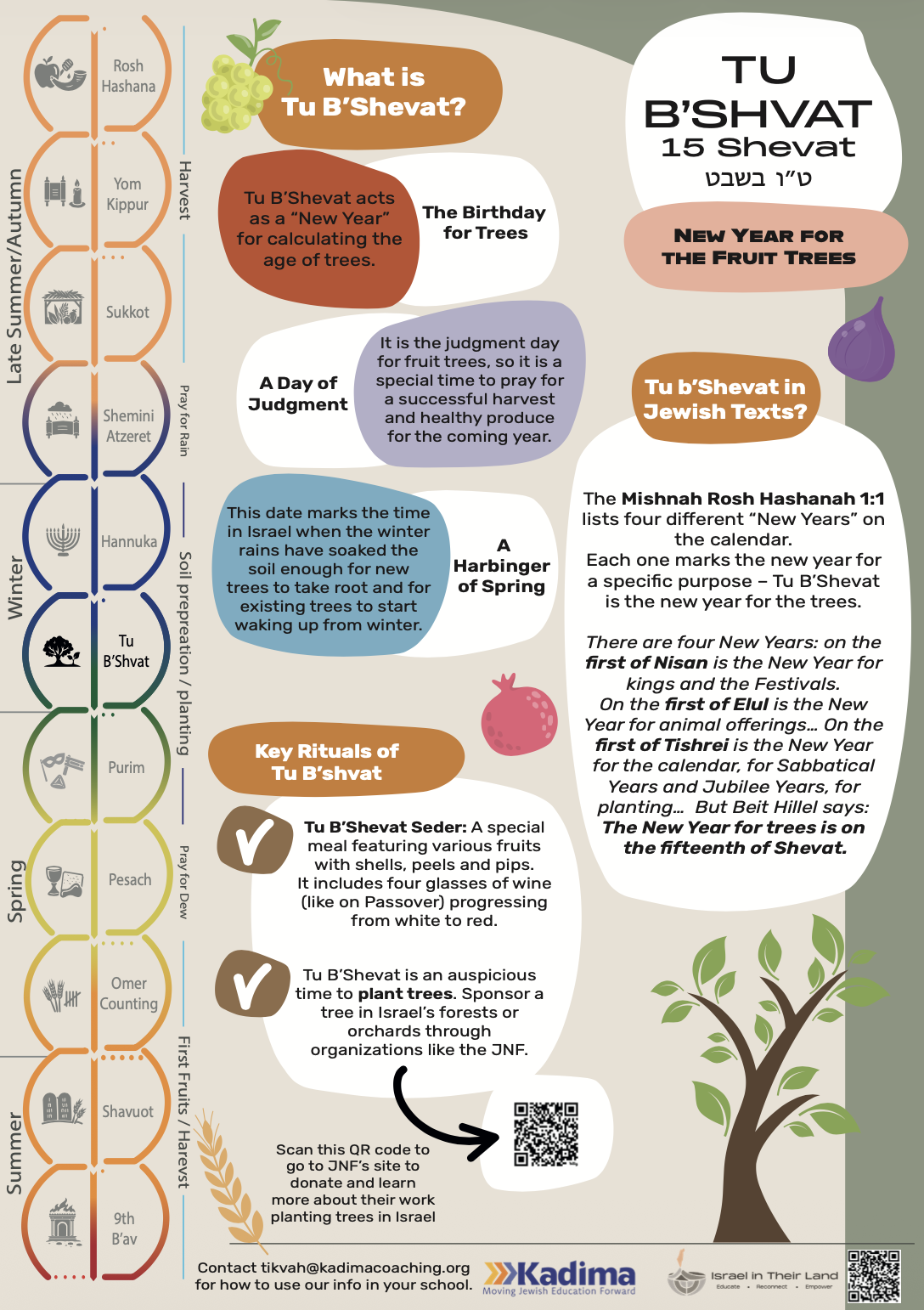
• The Birthday for Trees: Tu B’Shvat acts as a “New Year” for calculating the age of trees.
• A Day of Judgment: It is the judgment day for fruit trees, so it is a special time to pray for a successful harvest and healthy produce for the coming year.
• A Harbinger of Spring: This date marks the time in Israel when the winter rains have soaked the soil enough for new trees to take root and for existing trees to start waking up from winter.
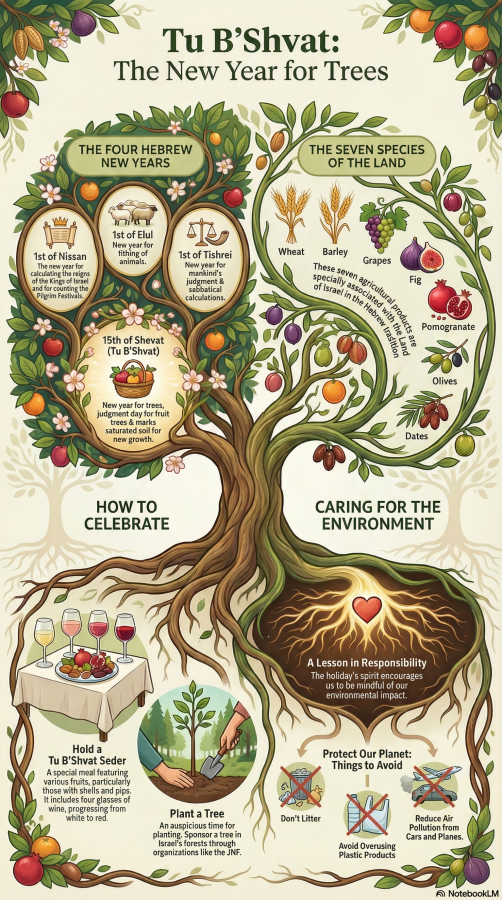
The Mishnah Rosh Hashanah 1:1 lists four different “New Years” on the calendar. Each one marks the new year for a specific purpose – Tu B’Shvat is the new year for the trees.
There are four New Years: on the first of Nisan is the New Year for kings and the Festivals. On the first of Elul is the New Year for animal offerings… On the first of Tishrei is the New Year for the calendar, for Sabbatical Years and Jubilee Years, for planting… But Beit Hillel says: The New Year for trees is on the fifteenth of Shevat.
• Celebrating Nature: Tu B’Shvat awakens our appreciation and responsibility towards nature and caring for the environment.
• Agriculture: Tu B’Shvat signals the time of year when the ground is finally wet enough from winter rains for new trees to be planted and survive.
- Calculating a Tree's Age for Offerings and Tithes: In ancient times, farmers used this date to track a tree's age and determine which year its fruit belonged to, when offering it to the Temple.
- The “Seven Species” in the Land—wheat, barley, olives, dates, grapes, figs, and pomegranates—were the staple foods of ancient Israel and used as offerings in the Temple. These fruits are still abundantly grown and enjoyed in Israel today!
Tu B’Shvat Seder: A special meal featuring various fruits with shells, peels and pips. It includes four glasses of wine (like on Passover) progressing from white to red.
Tu B’Shvat is an auspicious time to plant trees. Sponsor a tree in Israel’s forests or orchards through organizations like the JNF.
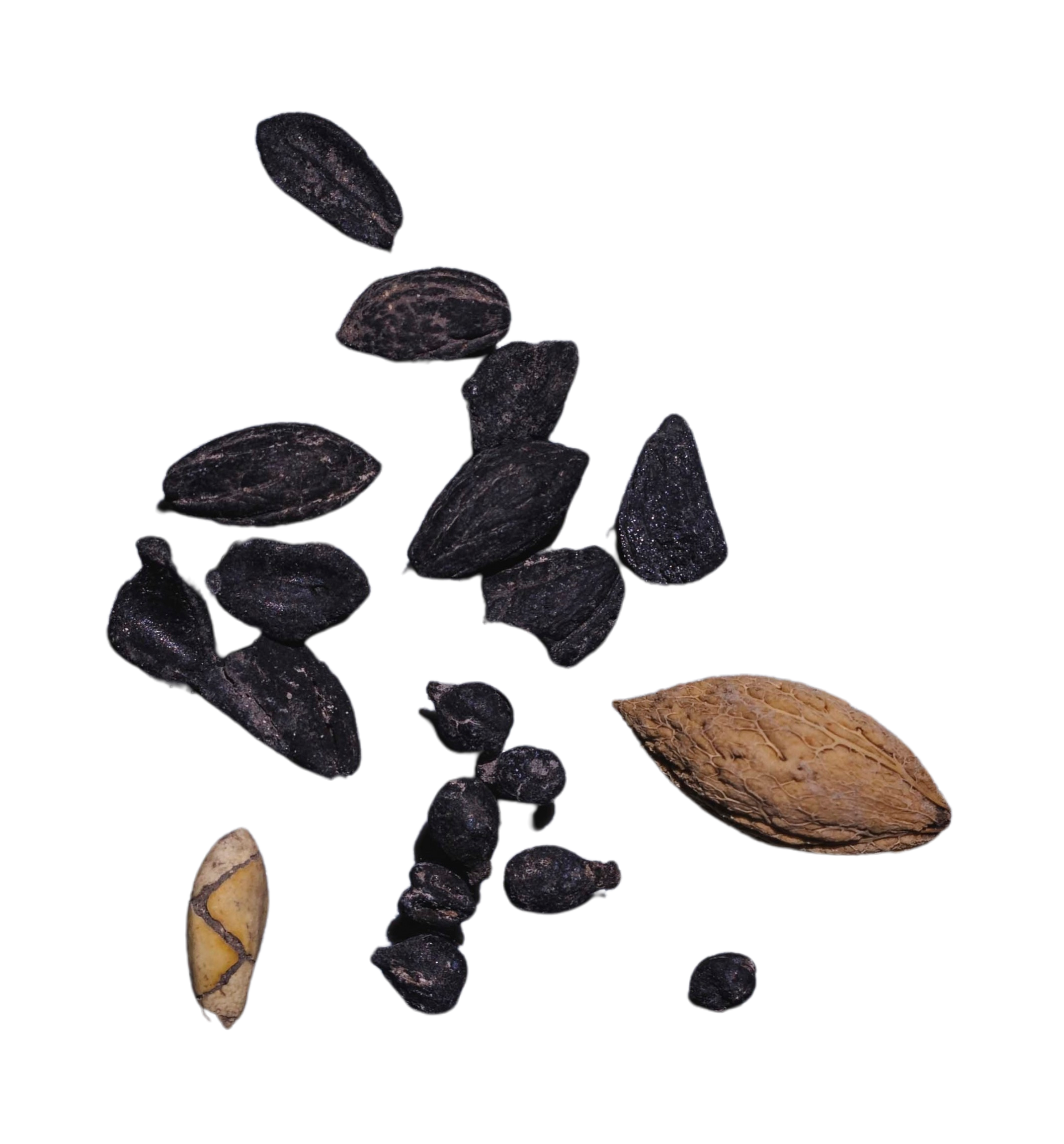
1) Ancient seeds found in the City of David's ancient drainage pipe, including olive and grape seeds, and other grains.
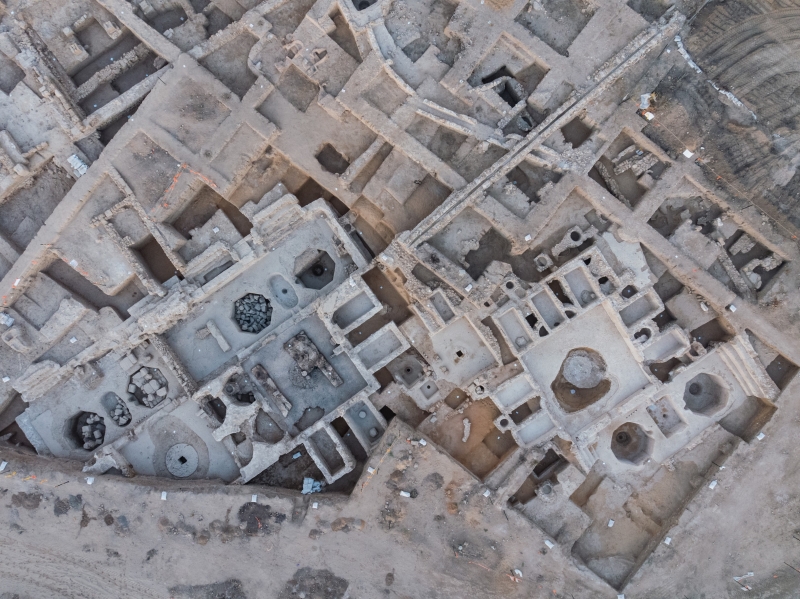
2) Wine and Grapes: Believe it or not, about 1,500 years ago, the ancient city of Yavne held the title for the largest wine factory in the entire world.
Learn more HERE
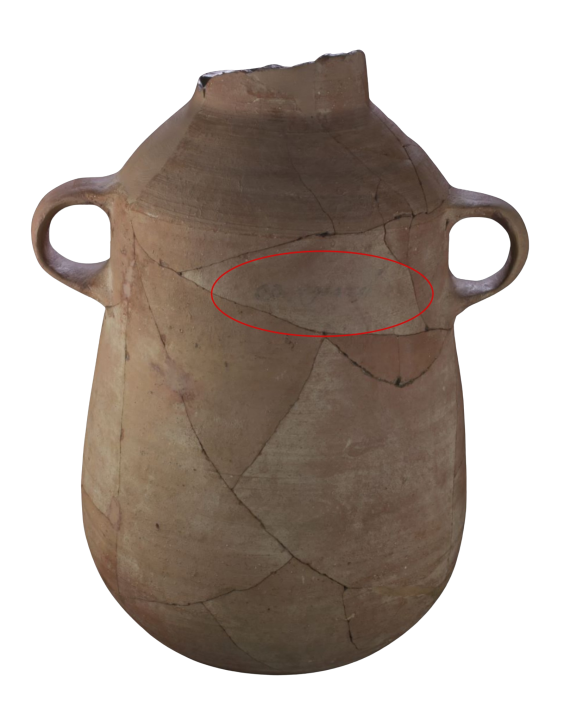
Found in the destruction layer of 587 BCE, this WINE JAR bears the inscription:

"Belonging to the daughter of Ya'ama, (wine of) good (quality)."
3) In the time of the Temple, olive oil wasn't just for cooking—it was the essential 'fuel' for Jewish spiritual life. It:
- kept the holy Menorah burning in the Temple every single day.
- played a key role in sacrifices. Read more HERE
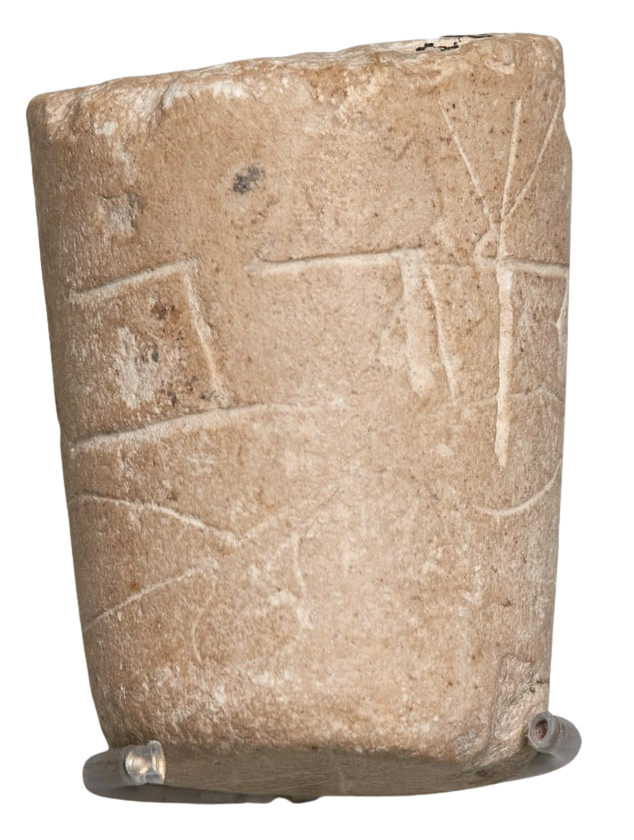
- was used to anoint the Kings of Israel.
Learn about King Solomon's annointing here
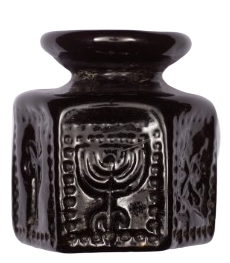
Glass ampullla with olive oil used by Jewish pilgrims: The ampulla was used as a Eulogia either as memorabilia or for the special properties of its content. Where Christian Eulogiae contained either holy water or oil, Jewish Eulogiae mainly contained oil taken from holy places, such as the Western Wall or synagogues in Jerusalem.
Learn more HERE